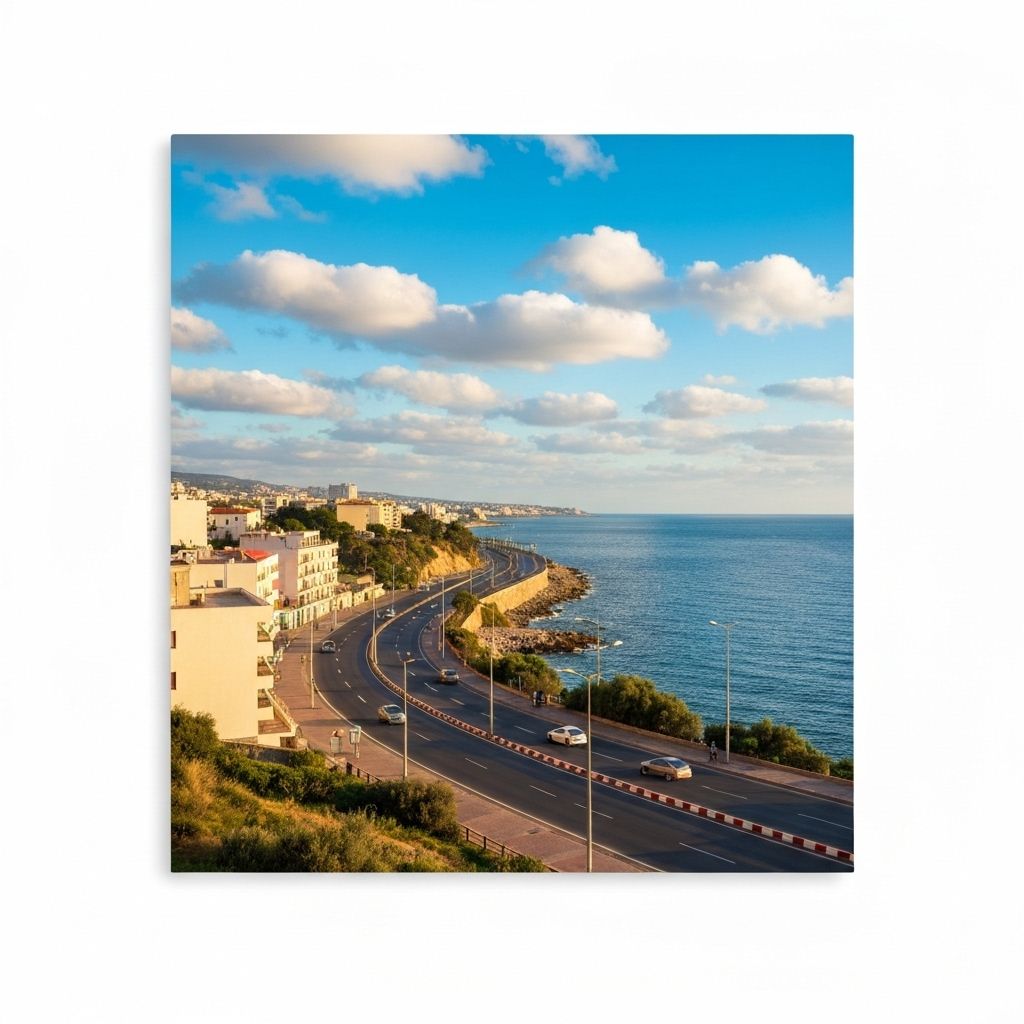
Understanding Algerian traffic rules and regulations is essential for safe and legal driving. While many rules are similar to European standards, there are important local differences and enforcement practices to know.
Fundamental Driving Rules
Basic Regulations:
- Drive on the right side of the road
- Overtake on the left side only
- Minimum driving age: 18 years
- Seat belts: Mandatory for all passengers (front and rear)
- Child seats: Required for children under 10 years
- Mobile phones: Hands-free only while driving
- Headlights: Dipped headlights required in tunnels and poor visibility
Zero Tolerance: Algeria has a zero-tolerance policy for drinking and driving. Any detectable alcohol level results in severe penalties including license suspension and imprisonment.
Speed Limits
| Road Type | Speed Limit | Notes |
|---|---|---|
| Urban areas | 50 km/h | Strictly enforced with cameras |
| Rural roads | 80 km/h | May be lower in villages |
| National roads | 100 km/h | Well-maintained highways |
| Autoroutes (Highways) | 120 km/h | Toll roads, modern infrastructure |
| School zones | 30 km/h | During school hours |
Speed Camera Alert: Algeria has extensive speed camera networks, especially on highways and urban areas. Fines are automatically issued to rental companies who will charge your credit card.
Right of Way Rules
Priority Rules:
- Roundabouts: Vehicles inside the roundabout have priority
- Intersections: Priority to the right unless otherwise indicated
- Traffic lights: Red means stop, amber means prepare to stop (not speed up)
- Pedestrian crossings: Pedestrians have absolute priority
- Emergency vehicles: Must give way immediately
- Buses: Give way to buses pulling out from stops
Parking Regulations
- Yellow lines: No parking at any time
- Red lines: No stopping or parking
- Blue zones: Paid parking during business hours
- White zones: Free parking with time limits
- Disabled spaces: Reserved for permit holders only (heavy fines)
Traffic Fines and Penalties
Common Violations and Fines:
| Violation | Fine (DZD) | Additional Penalty |
|---|---|---|
| Speeding (< 20 km/h over) | 2,000-5,000 | - |
| Speeding (> 20 km/h over) | 5,000-10,000 | Possible license suspension |
| Running red light | 5,000-10,000 | 3 points on license |
| No seat belt | 2,000-4,000 | Per person |
| Mobile phone use | 3,000-5,000 | - |
| Drink driving | 10,000-50,000 | License suspension, possible jail |
| No insurance | 20,000-100,000 | Vehicle impoundment |
| Dangerous driving | 10,000-50,000 | License suspension, possible jail |
Required Documents
You must carry these documents while driving:
- Valid driver's license (and IDP for foreigners)
- Vehicle registration (carte grise)
- Insurance certificate (attestation d'assurance)
- Rental agreement (if applicable)
- Passport or ID card
Police Checks: Random police checks are common, especially on highways. Always have your documents ready and be polite and cooperative.
Road Signs and Markings
Algeria uses international road sign standards similar to European countries:
Sign Categories:
- Red circles: Prohibitions (no entry, no parking, speed limits)
- Blue circles: Mandatory actions (turn right, roundabout)
- Red triangles: Warnings (curves, animals, roadwork)
- Blue rectangles: Information (hospital, parking, services)
- Green signs: Highway directions and distances
Special Road Situations
Toll Roads (Autoroutes)
Algeria has a growing network of toll highways. Payment methods:
- Cash: Algerian Dinars at toll booths
- Electronic toll cards: Available for frequent users
- Typical costs: 200-800 DZD depending on distance
Mountain Roads
Special rules for mountain driving:
- Vehicles going uphill have priority
- Use lower gears on steep descents
- Sound horn before blind curves
- Watch for falling rocks and landslides
Desert Roads
Additional precautions for desert driving:
- Inform authorities of your route and expected arrival
- Never leave paved roads without a guide
- Carry extra water, fuel, and emergency supplies
- Travel in convoy when possible
Accident Procedures
If involved in an accident:
- Stop immediately and turn on hazard lights
- Check for injuries and call emergency services if needed (14 for ambulance, 17 for police)
- Exchange information with other parties (names, insurance, license plates)
- Document the scene with photos and notes
- File a police report (constat amiable) - required for insurance claims
- Notify your rental company immediately
- Do not admit fault or sign documents you don't understand
Emergency Contact Numbers
- Police: 17 or 1548
- Ambulance: 14
- Fire Department: 14
- Highway Emergency: 104
- Roadside Assistance: Contact your rental company
Driving Etiquette
Understanding local driving customs helps you navigate safely:
- Horn use: Common and not considered rude - used for communication
- Flashing headlights: Warning of police ahead or "I'm coming through"
- Lane discipline: Less strict than Europe; expect vehicles to change lanes frequently
- Patience: Traffic can be chaotic; stay calm and defensive
Cultural Tip: Algerian drivers are generally helpful. If you're lost or need assistance, don't hesitate to ask - most people are happy to help tourists.